The Organic Spice Revolution: Cultivating Flavor from Nature’s Bounty
In an era where consumers are increasingly conscious of what they consume, the demand for organic spices has surged dramatically. This shift reflects a broader movement towards sustainability and health awareness that is reshaping global culinary practices.
Organic spices represent not only a commitment to natural farming but also a return to traditional methods of cultivation and preservation. As we explore this vibrant world, we uncover how these spices differ from their conventional counterparts and why they’re becoming essential ingredients in modern kitchens worldwide.
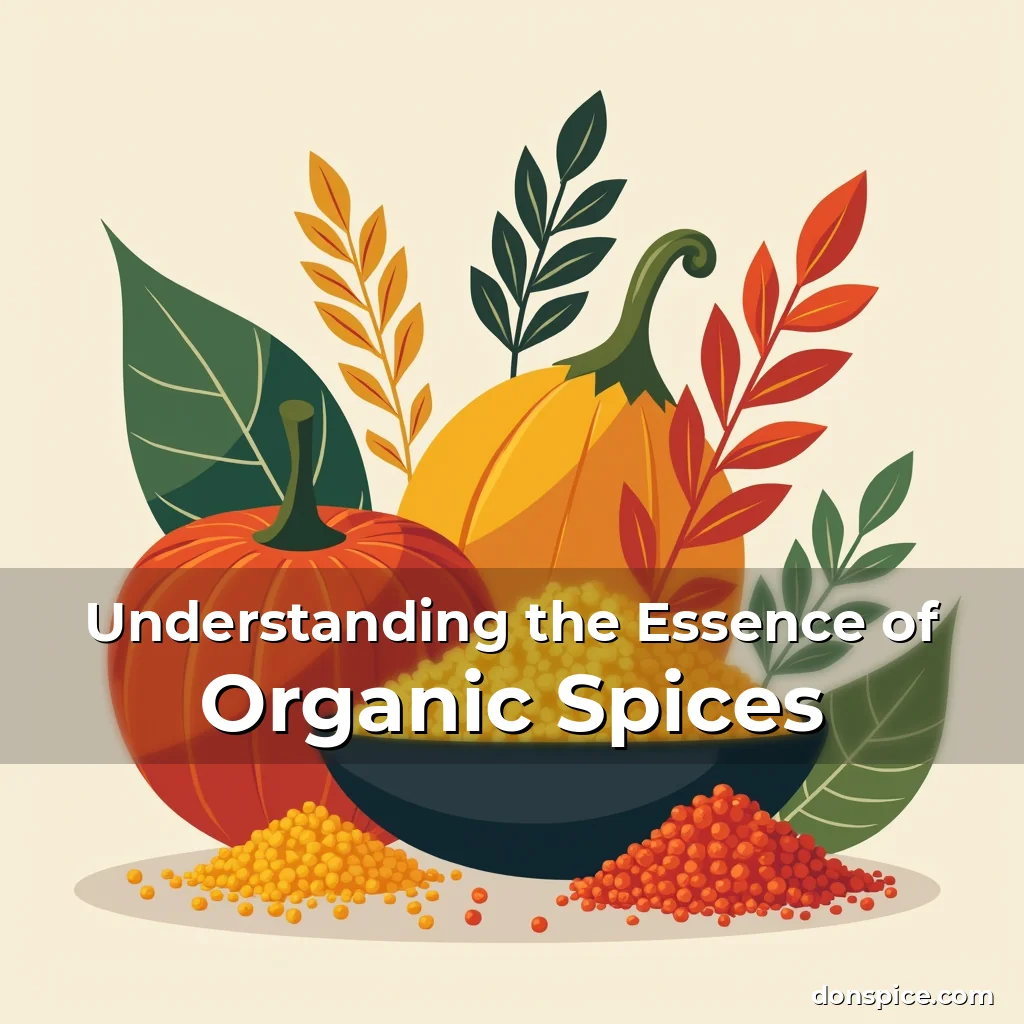
Understanding the Essence of Organic Spices
At its core, the term ‘organic’ signifies food products grown without synthetic pesticides, fertilizers, or genetically modified organisms (GMOs). For spices, this means every step from seed to spice rack adheres strictly to ecological principles.
Conventional spice production often relies heavily on chemical interventions to maximize yield and protect crops from pests and diseases. In contrast, organic farming prioritizes soil health through crop rotation, composting, and biological pest control techniques.
The benefits extend beyond environmental protection; studies show that organically cultivated spices retain higher levels of antioxidants and phytochemicals compared to non-organic varieties. These compounds contribute significantly to both flavor complexity and potential health advantages.
Moreover, organic certification processes ensure transparency in sourcing and processing. Reputable certifications such as USDA Organic or Ecocert provide assurance regarding quality standards and ethical labor practices within supply chains.
- Natural Pest Control: Organic farms utilize beneficial insects like ladybugs and lacewings to manage pest populations naturally instead of relying on chemical sprays.
- Biodiversity Enhancement: By avoiding monoculture planting, organic farms support diverse ecosystems which can lead to healthier soils and more resilient plants.
The Historical Roots of Organic Spice Cultivation
Long before the advent of industrial agriculture, ancient civilizations practiced forms of sustainable farming that closely resemble today’s organic methodologies. The Indus Valley people were among the earliest known societies cultivating aromatic herbs over four thousand years ago.
Evidence suggests that medieval European apothecaries used wild-harvested spices for medicinal purposes rather than commercially farmed ones. This practice laid early foundations for understanding plant properties and natural remedies.
During the Age of Exploration, trade routes facilitated the spread of exotic spices across continents. However, colonial exploitation led to unsustainable harvesting practices that depleted native species populations in regions like Southeast Asia and Madagascar.
In recent decades, there has been renewed interest in reviving indigenous knowledge systems surrounding spice cultivation. Communities in India and Morocco have preserved centuries-old techniques for growing cardamom and saffron using minimal external inputs.
Revival of Traditional Methods
Agricultural research institutions now collaborate with local farmers to document ancestral agricultural wisdom. One study published in the Journal of Ethnobiology found that traditional irrigation systems in Rajasthan improved water use efficiency by up to 40% compared to modern drip irrigation.
Farmers in Zanzibar employ intercropping strategies where cloves grow alongside citrus trees. This symbiotic relationship reduces disease transmission while enhancing overall farm productivity without artificial chemicals.
These revived practices not only preserve cultural heritage but also offer viable alternatives to environmentally damaging agrochemical dependency seen in many parts of the developing world.
Health Implications of Choosing Organic Spices
Emerging scientific evidence highlights significant differences between conventionally grown and organic spices at the molecular level. Researchers at Harvard T.H. Chan School of Public Health discovered that certain organic turmeric samples contained 68% more curcuminoids than non-organic versions.
This increased potency translates directly into enhanced bioavailability when consumed. Studies indicate that regular consumption of high-curcuminoid turmeric may help reduce inflammation markers associated with chronic conditions like arthritis and heart disease.
Pesticide residues present in non-organic spices pose long-term health risks even in small quantities. A WHO report revealed that exposure to common pesticide metabolites could disrupt hormonal balances affecting reproductive health and cognitive development.
Furthermore, organic spices tend to maintain fresher aromatics due to absence of preservatives commonly added during commercial processing stages. Freshness correlates strongly with both taste intensity and nutrient retention values.
Cultivation Practices Behind Organic Spices
Sustainable spice farming begins with selecting appropriate cultivars suited for local climates and soils. Farmers must consider factors like rainfall patterns, temperature ranges, and microbial activity levels inherent to different geographical zones.
Soil preparation plays a crucial role in establishing healthy root systems necessary for robust plant growth. Techniques include deep plowing followed by incorporation of green manure crops like legumes which fix nitrogen naturally into the soil matrix.
Irrigation management follows strict guidelines to prevent waterlogging while ensuring adequate moisture levels for optimal germination rates. Drip irrigation systems prove particularly effective in arid regions experiencing periodic drought conditions.
Harvest timing depends largely upon visual cues indicating peak maturity states in individual spice plants. For instance, coriander seeds should be collected once fully browned but still attached to stalks to avoid losing volatile oils responsible for characteristic fragrance profiles.
Processing Techniques That Preserve Organic Integrity
Post-harvest handling requires meticulous care to maintain the integrity of delicate spice compounds susceptible to degradation under improper storage conditions. Rapid drying methods minimize risk of mold formation while preserving essential oils.
Traditional sun-drying remains popular amongst artisanal producers despite technological advancements offering faster results. This method allows gradual evaporation of excess moisture while concentrating flavors through controlled exposure to ambient temperatures.
Mechanical grinding occurs only after complete dehydration to prevent heat-induced breakdown of sensitive compounds during milling operations. Stone mills continue being preferred tools for achieving uniform particle sizes without generating excessive frictional heat.
Quality control measures involve sensory evaluation panels composed primarily of experienced chefs who assess color consistency, aroma strength, and texture characteristics indicative of premium-grade materials suitable for professional culinary applications.
Global Market Trends Shaping Organic Spice Consumption
The global organic spice market is projected to reach $19 billion by 2027 according to Grand View Research reports. This exponential growth stems from rising consumer preference for clean-label foods emphasizing ingredient purity and traceability features.
North America currently leads in terms of value share held by organic spice imports, although Asia-Pacific region shows fastest-growing compound annual growth rate exceeding 10%. Countries like China and India are emerging as key players contributing substantially toward regional demand increases.
E-commerce platforms have transformed accessibility allowing niche brands specializing in rare or heirloom varieties gain international recognition previously unattainable via brick-and-mortar retail channels alone.
Governments around the globe implement policies promoting domestic organic production capacities aiming to decrease reliance on imported goods subject to fluctuating exchange rates and geopolitical uncertainties impacting trade relations.
Environmental Impact of Organic vs Conventional Spice Production
Life cycle assessments comparing organic versus conventional farming models reveal substantial reductions in carbon footprints associated with organic approaches. Lower energy requirements linked to mechanical tillage reduction contribute significantly toward net emissions savings.
Water conservation emerges as another critical advantage wherein organic farms demonstrate superior efficiency rates attributable to enhanced soil structure facilitating better infiltration capabilities reducing runoff volumes considerably.
Biodiversity indices measured within organic plots consistently outperform those recorded in conventional fields. Presence of pollinators such as bees and butterflies indicates healthier ecosystems capable of supporting wider range of flora/fauna interactions beneficial to long-term agricultural resilience.
Waste generation figures remain notably lower in certified organic facilities due to closed-loop recycling initiatives integrated seamlessly into daily operational routines minimizing landfill contributions typically observed in industrialized settings.
Supporting Local Economies Through Organic Spice Trade
Purchasing locally sourced organic spices contributes directly toward sustaining rural livelihoods dependent upon seasonal harvest cycles characterized by cyclical employment opportunities providing stable income streams year-round.
Cooperatives formed by smallholder farmers enable collective bargaining power improving access to fair pricing structures benefiting marginalized communities historically underserved by mainstream distribution networks favoring large-scale corporate interests.
Community-supported agriculture programs create direct linkages between urban consumers and remote producer groups fostering mutual trust relationships built upon transparent communication regarding product origins and ethical sourcing commitments made publicly available online.
Micro-enterprises engaged in value addition activities such as packaging customized blends cater specifically to specialty markets seeking exclusive products unavailable through mass-produced offerings dominated by big box retailers focused solely on volume sales metrics.
Future Prospects and Innovations in Organic Spice Industry
Advancements in biotechnology promise exciting developments poised to revolutionize future spice cultivation paradigms. Genetic marker-assisted selection enables breeders to develop climate-resilient strains capable of thriving amidst shifting weather patterns caused by global warming phenomena.
Nanotechnology innovations facilitate targeted delivery mechanisms for organic fertilizers increasing nutrient uptake efficiencies thereby reducing required application frequencies lowering input costs significantly without compromising output yields achieved traditionally.
Blockchain technology offers unprecedented visibility along entire supply chain trajectories granting end-users real-time data tracking capabilities concerning each batch’s journey from field to final destination ensuring absolute authenticity verifiable instantly whenever desired.
Artificial intelligence integration streamlines predictive analytics models forecasting commodity price fluctuations enabling proactive inventory management decisions safeguarding against unexpected shortages arising unexpectedly due to unforeseen climatic disruptions impacting harvest schedules unpredictably.
Conclusion
The journey through the realm of organic spices reveals a rich tapestry woven from historical traditions, contemporary science, and forward-thinking innovation. From ancient agricultural practices to cutting-edge technologies shaping tomorrow’s landscape, this evolution underscores our shared responsibility towards nurturing planet Earth sustainably.
As stewards of both personal well-being and planetary health, embracing organic choices becomes not merely optional but imperative. Whether cooking meals at home or exploring fine dining experiences abroad, every decision matters collectively forming powerful currents steering us toward brighter futures grounded firmly in nature’s enduring wisdom.

news is a contributor at DonSpice. We are committed to providing well-researched, accurate, and valuable content to our readers.