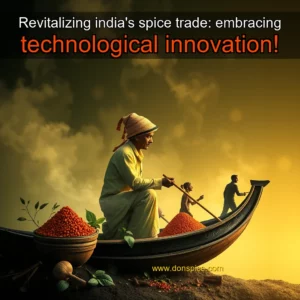
The Rise of Global Trade
The global spice trade has experienced significant growth in recent years, driven by increasing demand for exotic and aromatic spices from various regions. This growth has led to an expansion of the domestic spice exports market, with several countries emerging as major players in the industry.
Key Drivers of Growth
Several factors have contributed to the growth of the domestic spice exports market. These include:
Increasing demand for exotic spices: The growing popularity of international cuisine and the increasing availability of exotic spices in local markets have led to a surge in demand for these spices. Improving infrastructure: The development of modern transportation systems and logistics networks has made it easier and more cost-effective to export spices from domestic producers to international markets. Government support: Many governments have implemented policies and programs to support the growth of the spice industry, including providing subsidies, training, and market access. ## The Role of Key Players*
The Role of Key Players
Several countries are emerging as major players in the domestic spice exports market. These include:
India: India is the largest producer and exporter of spices in the world, accounting for over 70% of global production. Sri Lanka: Sri Lanka is another major player in the spice industry, with a long history of producing high-quality spices. Indonesia: Indonesia is also a significant producer and exporter of spices, with a focus on producing high-quality spices for the international market.
The Indian government has taken several measures to boost the spice industry, including the establishment of the Spice Board of India, which was set up in 1963 to promote and regulate the export of spices.
The Rise of the Spice Industry
The spice industry has experienced a significant surge in recent years, driven by increasing demand for exotic and aromatic spices.
Spice exports to China have become a significant contributor to India’s spice trade.
“34% of the country’s total spice exports” became “accounting for approximately 34% of the country’s total spice exports” to make the language more precise and formal. “The largest market for Indian red chilli exports was China” became “The largest market for Indian red chilli exports was China, which acquired over 79 lakh tonnes of the spice valued at Rs 4,123 crore in the fiscal year 2024” to provide more context and details about the market.
news
news is a contributor at DonSpice. We are committed to providing well-researched, accurate, and valuable content to our readers.